Originally by Ana Casado-Rodriguez, updated in 2026 by Vivienne Jansen
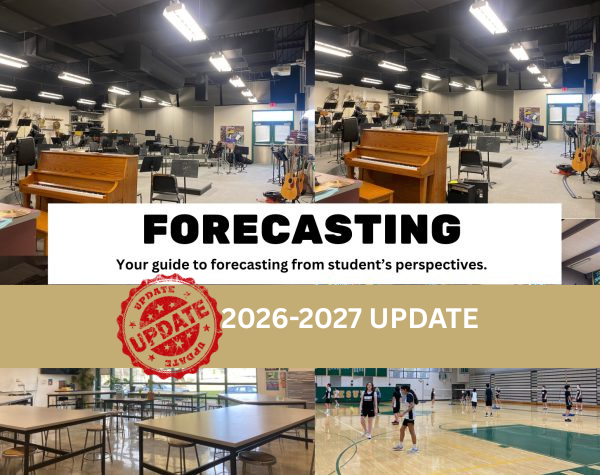
With forecasting approaching, freshmen, sophomores, and juniors must choose what classes they will be taking for the next school year.
When choosing what classes to take next year, students must take many things into consideration, such as the class workload, any prerequisites necessary, and the class dynamics.
To get student perspectives on classes at Jesuit, Jesuit Media polled over 40 students regarding a specific class they are taking this year or have taken in the past.
The students were asked to share their opinion on the class. First they shared their “Need To Know’s”, which refers to things students should do before deciding to take the class. Then they were asked to share their favorite part about the class.
Keep in mind this is one student’s unfiltered opinion. If you feel you are in need of more information, reach out to the teacher, your counselor, or peers who might have taken the class as well. Or, you could check out the forecasting overview page on Jesuit’s website.
Each elective offered is categorized into fine arts, media, P.E. and health, science, math, and other.
Jesuit Media could not get interviews for Tech Theater, Creative Writing, Guitar, AP Art IV, General Psychology, AP Biology, and Intro to Engineering, but there is still a brief description of the courses below.
FINE ARTS
Drama & Theater
Feedback from Senior, Carissa Gerung
The Need-To-Know’s
“The workload is pretty light, but apparently it’s going to pick up soon since we have to memorize lines. From the first semester I basically didn’t have homework, but I would just have to prepare for some video recordings, etc… This class is a mix of games (movement and verbal) and also lectures where the teacher talks to us and we just take notes and discuss”.
Favorite part about the class
“My favorite part about this class is that I get to learn about the tools of the actor, such as the body, voice, and imagination. I really like how we can utilize these drama tools in different situations like public speaking or persuasion, and I think it is very useful. This class is also a great way to learn how to not take yourself so seriously, and how to not be embarrassed when you’re in front of an audience.”
Tech Theater
Course Description
The Fine Arts Department at Jesuit High School offers the opportunity for varied as well as concentrated experiences to explore students’ creative energy. The courses begin with the development of basic skills and culminate in programs designed to maximize personal expressions in selected media. Students have many options for first level classes that do not require previous experience or training.
Music Production
Feedback from Senior, Aidan Smith
The Need-To-Know’s
“This is a super fun project driven class that doesn’t involve much homework. It mostly involves learning music concepts in class and applying them to various projects. The class is well paced and easy to pick up regardless of previous experience.”
Favorite part about the class:
Favorite part about the class
“I love the freedom that is given to work at your own pace and put your own spin on things. The class is all about creativity.”
Cantoria Choir
Feedback from Junior, Olivia Ossowiski
The Need-To-Know’s
“It’s mostly a participation based class, so it is a relatively easy workload and doesn’t tend to have any homework. If we do have homework it only really takes 15 minutes or less. We do have some outside of school participation, since we have four concerts a year on campus but after school hours. We also perform at the Grotto’s Festival of Lights each December and attend a treble festival at St. Mary’s after school one day in the fall.”
Favorite part about the class:
“My favorite part of this class is being able to have a break in the day to not do academic school work.”
Chamber Choir
Feedback from Sophomore, Molly Kennedy
The Need-To-Know’s
“There is rarely homework but you will almost always be working really hard in class. You will need to be coachable because Ms. Caldwell gives feedback and constructive criticism on how the choir can do better. Each song and performance we work on is very much a team endeavor so you should be open and excited to get close with your classmates. You will find so many new friendships and feel yourself improve simply by singing for an hour every day. Out of school participation consists of performances, extra morning rehearsals, team-building events, and some super fun trips. You’ll need an understanding of how to sight read, be willing to get past nerves, and you will have to jump in and try your best every day because you’re part of a team.”
Favorite part about the class
“My favorite part of class is the connections I’ve made, and that no matter how rough of a day I’m having, walking in and seeing a room of supportive, friendly people who make me laugh can fix it all.”
Creative Writing
Course Description
The Fine Arts Department at Jesuit High School offers the opportunity for varied as well as concentrated experiences to explore students’ creative energy. The courses begin with the development of basic skills and culminate in programs designed to maximize personal expressions in selected media. Students have many options for first level classes that do not require previous experience or training
Intro to Instrumental Music
Feedback from sophomore, Chelsea Thompson
The Need-To-Know’s
“It’s very beginner friendly, and people have the choice of any instrument, from the piano to drums and clarinet. It’s really nice how I have the option to pick anything and learn something new. Students don’t need any experience going into the class, so it’s a great option to try something new.”
Favorite part about the class
“I like being able to create music with my friends during school, and the experience of going to concerts is so great and it’s truly something you can only get from the arts. I love the dinners before concerts and the people and teachers make this class worth forecasting for.”
Symphonic Band
Feedback from senior, Ethan Strong
The Need-To-Know’s
“If you’ve been playing for years it’s really fun and easy. But if it’s your first year in the class it might be a little tough.”
Favorite part about the class:
Favorite part about the class
“My favorite part of the class is sitting with all my friends, doing something I love, and improving along the way.”
Concert Band
Feedback from sophomore, Carter Solosmon
The Need-To-Know’s
“This class is a fine arts class in which you will learn and play concert music with your classmates as part of a band. There is little official homework, although it is recommended that you practice over the weekends and breaks. Everyone in the class is expected to participate in pep band, where we support the Jesuit football and basketball teams while building community together. Mr. Hoffman walks the band through a variety of songs over the course of the year, guiding and teaching along the way (although you do have to have some background knowledge of the instrument you choose). If you love music and dislike homework, this class is a great stress reliever! To anyone who likes music, I would highly recommend this class!”
Favorite part about the class
“The Awesome friendships I’ve made!”
Jazz Studies
Feedback from Senior, Dom Dolan
The Need-To-Know’s
“Jazz Studies primarily focuses on improving your skills as a musician through practice and dedication. By participating in Jazz Studies you will have the opportunity to perform in front of many different audiences, allowing you to share your passion with family, friends, and the greater community. Just like any other band class, this one will require some practice outside of school, but other than this homework is extremely rare. The class starts early at 7:00 am and takes place four times a week. Being in the Jazz band also allows you to participate in Pep Band, which performs during all home football and basketball games. Personally, Jazz Studies is a serious contender for my favorite class at Jesuit. I have been a member of the Jazz band for all four of my high school years and I would continue for four more if I could. Most of the people I have met in the class are now my closest friends and truly outstanding musicians. Jazz Studies is not well suited for beginners but if you are interested in rapid improvement and a community of dedicated musicians then there is no class that I can recommend more highly than Jazz Studies.”
Favorite part about the class
“My absolute favorite part of Jazz Studies is how it strikes a balance between being a serious band class while at the same time being incredibly fun. Over the span of four years I have seen dramatic improvement in ability and understanding of musical concepts. I have had the chance to venture outside of my comfort zone and discover a whole world of music that I may have otherwise never found. The experience I have had in Jazz Band has inspired me to play more often and even pursue performance opportunities outside of the classroom.”
Guitar
Course Description
Guitar I is designed for students who have either never studied guitar before, or for the student who has self-taught themselves guitar, but cannot read music. Guitar I students will learn to read and perform music for chords as well as melodies in both standard notation and Tabulature. There will be one required public performance which is held in the spring. Students are required to provide their own guitar as well as purchase two textbooks, The H.O.T. Guitar book 1 and SmartMusic. Students are asked to not purchase any materials until they’ve been contacted by Mr. Hoffman. This course fulfills the Fine Arts requirement, or may be taken as an elective.
Art I
Feedback from sophomore, Agamya Guhal
The Need-To-Know’s
“Art I is a really fun class to give you a break from your hectic day as a high school student. It’s a fun class filled with community and creativity. The workload is pretty light, all I have been assigned outside of class are my weekly sketchbook drawings that take about 20 minutes. It’s actually a pretty fun assignment. It’s also a very hands-on class with a lot of teacher support. If you feel like you aren’t good at art that okay, your teacher is there for you and it’s a class for beginners”
Favorite part about the class
“My favorite part of the class is how flexible the class is and how much creativity is a part of it”
Art II
Feedback from sophomore, Gavin Werts
The Need-To-Know’s
“The requirements for the entire art II class are very chill as it only includes 1 prior year of art at Jesuit.”
Favorite part about the class
“My favorite part is the classroom culture we have built. In my eyes everyone can express themselves and strengthen bonds with one another. Art is unlike any other class because everyone there is there for purpose not obligation”.
Art III
Feedback from Junior, Han Tran
The Need-To-Know’s
“Art III is mainly a project based class. You get a good chunk of time to work on your pieces and the workload is not too heavy if you know how to manage your progress. We are given a weekly sketchbook, which we have class time to work on. It usually takes me around an hour to work on them at home since I don’t work on them in school. Be ready to experiment with a lot more materials and mediums! We explore a lot more in Art III and get more liberty with our prompts.”
Favorite part about the class
“My favorite part about this class so far has been the bigger projects. Art III gives me more freedom to make my own creative decisions in my pieces so I have enjoyed the process.”
AP Art IV
Course Description
AP Art students will deepen their investigation at an advancing level equivalent to a first-year college course in 2-D Art and Design by creating a portfolio that is based on three components: documentation of process, final works and written articulation of the process and work. Students will choose a subject and delve deep into exploratory and traditional studio practice in their chosen visual interest. Students create a portfolio with five final, highly-developed works, supported by 15 pieces of work that document their studies through in-depth and thorough process in the form of a rich and exploratory art journal.
MEDIA
Advanced Media Production
Feedback from senior, Kiley Feller
The Need-To-Know’s
“Media class is very much you get what you put in. There’s a standard of doing a lot of work and putting in a lot of effort because that is what creates such a meaningful class and an effective space. The class can take a lot of time management and depending how well you do that, there can be a significant course load. The structure of the class enables you to create your own deadlines (while still maintaining relevance/newsworthiness) and so as a student if I am drowning in work already I probably wouldn’t take on another project. The class is not a lecture course at all and can be individual or collaborative, all depending which path you take. Overall the course is so much fun and so worth taking because you get to explore so many different aspects of media and areas of campus. The class as a whole really is based on the effort you put into it…”
Favorite part about the class
“The freedom to be creative and explore new things/areas of media, I feel like I have been able to learn a lot because Mr. Falkner provides the space to be curious. Also creating the newspaper and late nights working on it are always a highlight”.
Fundamentals of Media Production
Feedback from junior, Finley Clark
The Need-To-Know’s
“This is a very participation-based class and you are very much in control of your workload. In the beginning, you will learn a lot about how to use the technology and resources that are provided to you. Once you are working on projects it is all about time management which should be something you are comfortable doing because you will have time to work on stuff in class but sometimes it requires time taken outside of class to get projects done. ”
Favorite part about the class
“My favorite part of the class is learning new media based skills and being able to collaborate with my classmates.”
Yearbook Design & Publication
Feedback from senior, Emilie Erickson
The Need-To-Know’s
“Yearbook is a really fun class but does require good time management and good communication skills. You have to reach out to multiple people and get good stories for your pages, and you have to manage your time well to complete pages by their deadline. You get to learn a lot about design and how to use the software of adobe indesign. Overall it’s a fantastic class!”
Favorite part about the class
“My favorite part has been being able to express my creativity and creating really good connections in the class.”
Photography & Graphic Design
Feedback from senior, Mary Maidment
The Need-To-Know’s
“I wish I knew the amount of time I would be spending outside of school to shoot games and events.“
Favorite part about the class:
Favorite part about the class
“I like how we cover a wide range of topics to fully explore photography and graphic design. I also like how the class is self paced and we have plenty of resources available to work with.”
PE & HEALTH
Power Training (Fall or Spring)
Feedback from junior, Grant Valley
The Need-To-Know’s
“You need to be expected to work hard. I have Massey who is an amazing motivator, coach, and person. If you are lucky enough to have his class, he will push you to your limit because he wants you to reach your potential. You don’t need to have ever lifted a weight in your life, or you could be a bodybuilder. It doesn’t matter, he treats all of his students the same way. The class isn’t based on who can lift the most, but who gives 110% and improves.”
Favorite part about the class
“The atmosphere is amazing. When you are in an environment where you are trying to improve yourself and so is everyone around you, it makes for a fun time. Also highly recommend playing music, it brings the vibes up.”
Recreational Sports
Feedback from senior, Carson Kennedy
The Need-To-Know’s
“First of all, Rec Sports has been an amazing class for me. After cross country season, I struggled to get my energy out after school, so the ability to participate in games like soccer and basketball during school has been great. Since a student’s grade in the class is fully based on their participation during the class, there is no workload outside of school. Therefore, I have zero homework from this class on a nightly basis. I recommend Rec Sports to anyone looking for a fun, entertaining, and competitive class!”
Favorite part about the class
“I love to play competitive games such as basketball and kickball in the new smith gym. Also, communicating with teammates and opponents between games and in the Locker room makes the class amazing as well.”
General Psychology
Course Description
The General Psychology course introduces students to the discipline of psychology; the study of mental processes and human behaviors. It is a survey course that includes the following subtopics: research methods, the brain, nervous and endocrine systems, genetics, sensation & perception, consciousness, learning, cognition, intelligence, motivation and emotion, developmental psychology, personality and identity, clinical psychology and social psychology.
AP Psychology
Feedback from senior, Claudia Danner
The Need-To-Know’s
“It’s recommended to have a good understanding of people and the world around them because we do a lot of activities where if you come in with not a lot of knowledge, they are much more difficult. It’s also important to know that this is an AP class so the workload is heavier, but it’s still a fun class to be in.”
Favorite part about the class
“The mix between lectures and activities takes what you learn and combines it with real world scenarios. The people in the class are very engaged and interested and the class dynamics are very fun to be around.”
Science
Anatomy & Physiology
Feedback from senior, Quinn Geunes
The Need-To-Know’s
“Anatomy and Physiology requires no prior knowledge to taking the course, just the curiosity to want to learn more about the body. It’s great for students who are interested in pursuing a career in healthcare. The homework load isn’t too bad with just some sketching assignments here and there to accompany the unit. Overall, it just takes a lot of memorization. Best part, no final exam!”
Favorite part about the class
“My favorite part of the class has to be the skeletons Mr. Massey keeps in the room. I love being able to pinpoint what I’m learning on an actual body. I also love the opportunity I was able to have through the class required job shadow.”
Environmental Science
Feedback from senior, Grady Brown
The Need-To-Know’s
“This class is not one that gives a large workload, does not feature a lot of homework, and most of the work can be finished in-class. This class does not require a significant amount of outside of school participation. A large part of this class is project-based, and you do a fair number of presentations.”
Favorite part about the class:
“I really enjoyed the field trip to the Bonneville Dam”
AP Chemistry
Feedback from senior, Ali Mo
The Need-To-Know’s
“The class itself doesn’t give much homework. Before tests, we’re given a review sheet and a chapter worksheet which is one of the only times we’re given homework but they’re time consuming to complete. Sometimes students have to finish some lab calculations and analysis outside of class but it’s very manageable. Occasionally, if a student doesn’t finish a lab in class they have to come after school to finish it. The class is structured around lectures with some time given in class to complete labs and worksheets. The material is very similar to the work in Chemistry honors so the first semester is mainly reviewed with harder questions and a few new topics.”
Favorite part about the class
“My favorite part of the class is the labs. We recently used bunsen burners and different metals to experiment with different flame colors.”
AP Physics
Feedback from senior, Ruben Landeros
The Need-To-Know’s
“The homework you are given is a good amount but Mr. Sharp gives you all week so you have plenty of time to work. In total if you actually work it will take a little more than an hour over the week. Other than studying there is no outside of class participation. There is a lot of class discussion during practice problems and labs but it is mostly lectures. This class is hard but if you can keep up you have nothing to worry about.”
Favorite part about the class
“The community. If you think you are confused just know that you aren’t the only one and there is probably someone else to help explain it to you.”
AP Biology
Course Description
AP Biology is a continuation of Biology I (H), including evolution, vertebrate anatomy and physiology, and molecular biology. Students are required to express understanding in both written and oral forms, as well as to be reflective about their thinking processes. Students must be able to take responsibility for their own learning. Requires student directed, inquiry based projects. Students may choose to sit for the AP Biology exam at the conclusion of this course. This course fulfills the appropriate year’s requirement for Science.
MATHEMATICS
Introduction to Computer Science
Feedback from junior, Reese VanderPloege
The Need-To-Know’s
“The workload was very light, as we weren’t given much homework and we had lots of class time to work on it. There wasn’t any outside of school participation. This class is all lecture-based, and when we started new units there would be more lectures. There were 6 quizzes last year, and no tests and no final exams. In the first semester, we used Snap!, which is snapping premade blocks of code together, and Python right at the end. In the second semester, we used Greenfoot, which used java, to code a lot of scenarios/little games. I honestly loved the class and understood the work very easily, but if you don’t understand or like coding/programming it can be very confusing and frustrating. “
Favorite part about the class
“My favorite part was the end of year project where we coded our own video games with partners. We were given complete control over what our scenario could be, but had to use what we learned through the year.”
AP Computer Science
Feedback from Senior, Isabelle Macielinksi
The Need-To-Know’s
“This class is good for people who like logic-based problems to solve. This class has a lot of lab time to practice coding skills given different scenarios. There are lectures where we code along with Mr. Cowal to learn new material.”
Favorite part about the class
“My favorite part is when I get the correct output after trial and error, it is very satisfying.”
Data Structures
Feedback from senior, Nicholas Rask
The Need-To-Know’s
“The class is very project-based and many days are lab time for whatever the current coding project is. The homework is light if you use your time in class well”
Favorite part about the class
“My favorite part is working together with my group mates on projects.”
Intro to Engineering
Course Description
This course is designed to introduce students to the fundamentals of design thinking and problem-solving through hands-on fabrication. Students will learn to utilize a variety of technological tools, including 3D printers, CNC routers, and CAD/CAM software, to bring their creative ideas to life. By engaging in practical projects, students will develop essential skills in engineering design, mechanics, programming, data analysis, and teamwork.
Other
Speech and Debate
Feedback from sophomore, Kate Jondahl
The Need-To-Know’s
“Speech and Debate is very beginner friendly. I signed up with no experience and was incredibly nervous to give my first speech in front of the class. However, I grew in confidence as I soon learned not just how to prepare, but how to deliver my ideas effectively. We watch examples, and study TED talks before being given ample time to thoroughly research our topics and write impactful speeches, presenting them in front of the class.”
Favorite part about the class
“My favorite part of this class was the Mock Trial unit where we were given a detailed case and split up into prosecution and defense. We learned objections, court procedures, and became attorneys and witnesses. Our class was very competitive, and we had so much fun challenging each other to improve and grew closer by accusing one another of murder.”
International Studies
Feedback from senior, Hobby Miller
The Need-To-Know’s
“Honestly, you don’t need to know anything going into IS. This is a true elective, just an entry level look at the international world around us.”
Favorite part about the class
“It’s a very open-ended class. In the first semester, we were assigned a country that would represent many assignments, projects, and moments of culture sharing. I definitely enjoy the international aspect, but also the fact that the class is very chill. Mr. Hahn is a good teacher who knows what he’s doing and does well to create a good class environment.”
You can also forecast to be an aide for a department, which means helping them with organizing, and work. There are four different aide roles at Jesuit, which are counseling aide, DEI aide, campus ministry aide, and CLARC aide.
AVLI Courses
Jesuit has also started a new program this past year called AVLI courses, which stands for Arrupe Visual Learning Institution. This program offers more advanced and specialized electives that are both full year and semester. Something different about these classes is that they are online, so even though you report to a classroom everyday, the learning is completely online and the students get assigned homework and can complete it throughout the week.
Another unique part of the semester-long classes is that they only work in a certain semester. Below, they are marked to be a fall or spring semester class, and students are only allowed to take those classes in their corresponding semester.
Even though Jesuit Media wasn’t able to get interviews from these classes since they are fairly new, there is a brief description of each of the classes below.
Full Year:
AP Environmental Science – The AP Environmental Science course focuses on using scientific principles to analyze the interrelationships of the natural world and evaluate solutions for both natural and human-made environmental issues. Students engage with the material asynchronously through daily videos, comprehension checks, and virtual labs on the AP Classroom site, supplemented by one mandatory synchronous evening meeting per week. This structured yet flexible protocol is designed to ensure students are fully prepared for the College Board exam in May.
AP European History – AP European History explores significant events and figures from 1450 to the present by training students to analyze sources and develop historical arguments through seven key thematic lenses. The curriculum offers a flexible schedule for independent study, though it requires consistent weekly engagement and attendance at one live evening meeting. By mastering these historical reasoning skills, students learn to connect complex developments across different eras and institutions.
Ap African American Studies – This interdisciplinary course explores the diverse history and achievements of African Americans, ranging from ancient African kingdoms to contemporary society. Students engage with rigorous primary sources to prepare for the spring AP exam while following a flexible schedule that accommodates their individual school days. Though most work is completed independently, students must participate in one required live evening meeting each week.
American Sign Language III – This course explores Deaf culture and history by following the daily lives of three friends, offering insights into famous Deaf individuals and immersive activities like vlogging and travel. The curriculum is designed for flexible, independent study to fit various school schedules while requiring consistent weekly participation. To support student progress, teachers provide weekly one-on-one live drop-in sessions and are available for on-demand appointments.
AP Cyber Security – This yearlong course provides a comprehensive introduction to cybersecurity by teaching students to identify threats and manage risk through a defense-in-depth strategy. Participants explore specific vulnerabilities and detection methods across networks, devices, and applications while examining the broader impact of security on society and government. The curriculum is designed to align with professional standards, ensuring students develop the practical skills necessary for the modern workforce.
AP Business with Personal Finance – AP Business with Personal Finance introduces the core disciplines of entrepreneurship, marketing, and management through practical case studies and project-based learning. Students master essential personal financial literacy by applying national standards alongside college-level business concepts. The curriculum effectively bridges the gap between professional business applications and individual financial management to prepare students for both higher education and real-world scenarios.
Semester Long:
Accounting 1 (fall) – Accounting is an essential aspect of every business organization. In this course, students will learn accounting for a service business organized as a Sole Proprietorship. Students will analyze financial statements and learn the accounting cycle by working through application problems and applying accounting concepts to real-world situations. This course is primarily asynchronous and allows students to work at their own pace for weekly assignments. There is a synchronous meeting that will take place one evening per week that students are expected to attend.
AP Microeconomics (fall) – AP Microeconomics teaches students standard economic tools through the lens of Catholic moral tradition and the teachings of thinkers like St. Thomas Aquinas. The course prepares students for the AP exam by connecting modern market concepts to faith-based values and social encyclicals. Students can complete their work on a flexible weekly schedule, though they are encouraged to attend an optional live evening meeting.
Intro to Sociology (fall) – Sociology examines modern American social themes like family, gender, race, and crime through research, writing, and active class discussions. Students are expected to stay determined and engaged while exploring topics like social inequality and cultural analysis. The course offers a flexible weekly schedule for independent work, supplemented by an optional live evening meeting for those who want to join.
Intro to Business and Entrepreneurship – This entrepreneurship course teaches the basics of starting a business by having students solve real-world problems. You will practice essential skills like group collaboration, meeting deadlines, and presenting ideas to stakeholders. The class offers a flexible weekly schedule for your coursework, but you must attend one live meeting every week.
Genocide and the Holocaust (spring) – This course looks at both the academic and social constructions of genocide. We will view the Holocaust as the paradigmatic example of, but not only, genocide in modern history. Students will study the causes and processes of genocide as well as other contemporary crimes against humanity. Students and parents should be advised that this course utilizes intense and disturbing materials. There is a synchronous meeting that will take place one evening per week that is optional for students to attend. Meeting times to be determined at the beginning of the term.
Introduction to Veterinary Careers (spring) – In Introduction to Veterinary Careers, students will investigate the vast field of veterinary medicine, from entering the field to living and growing within it. They will explore educational and licensing requirements, the varied jobs within the profession, and the reality of everyday life as a veterinarian (or veterinary support staff). Students will consider social and ethical challenges they may encounter to help them discern if veterinary medicine is right for them. There is a synchronous meeting that will take place one evening per week that is optional for students to attend.
Medical Terminology (spring) – Medical terminology is a specialized language used by health care practitioners and, just like a foreign language, it has its own vocabulary and ways of stringing together words. This course combines an introduction to fundamentals of medical terminology and terms associated with the various bodily systems with the opportunity for students to learn more about professions throughout the medical field.
Computer Game Development (spring) – Video games are the biggest entertainment industry in the world. This course examines the impact that games have on our society and exposes students to wide variety of video games and genres, while teaching students to create their own video games and think critically about the games that they play. Students will learn to use a basic game engine to bring their video game ideas to life. Some previous experience in computer science is helpful but not required. One-on-one synchronous teacher drop-in support time is offered each week for students, as well as on demand, by appointment.