
At Jesuit, Lent and Easter are more than just dates on the school calendar. While the season moves from Ash Wednesday to celebration, students experience it in numerous different ways.
For junior Luke Hanifan, Easter stands out as a time of reflection rooted in the story of Jesus’ Passion.
“Easter is a time to contemplate and reflect,” Hanifan said. “It is a time to ask myself hard questions.”
The sense of reflection often begins during Lent when students are invited to give up something or take something on.
Hanifan, for example, chose to give up YouTube. What started as a Lenten sacrifice became a rewarding habit as Hanifan reported getting more sleep. “It made my life so much better,” he said.
Other students made similar choices. Sophomore Dulcie Cleeland stepped away from social media specifically aiming to cut down on her “doom scrolling.”
Cleeland highlighted her choice as one of awareness rather than solely restriction.
“I just felt like it was something that does not have much of a positive impact on my life,” she said. “It was a good reason to take the time to reflect on how maybe the negative thing was not needed during Lent.”
Max Perez, another sophomore at Jesuit, described his journey of giving up sweets as challenging yet “morally and ethically respectable.”
Across these experiences, students repeatedly return to the idea that Lent is about more than the simple act of giving something up. It becomes a lesson in sacrifice and perspective. Senior Olive Brown depicted it as a reminder of a concept much greater than personal discipline.
“It teaches me that my sacrifice is nothing compared to what Jesus did for me on the cross,” Brown said. “Nothing I could ever give up or take on is anywhere near what Jesus gave up when he came down to earth and suffered torture and death.”
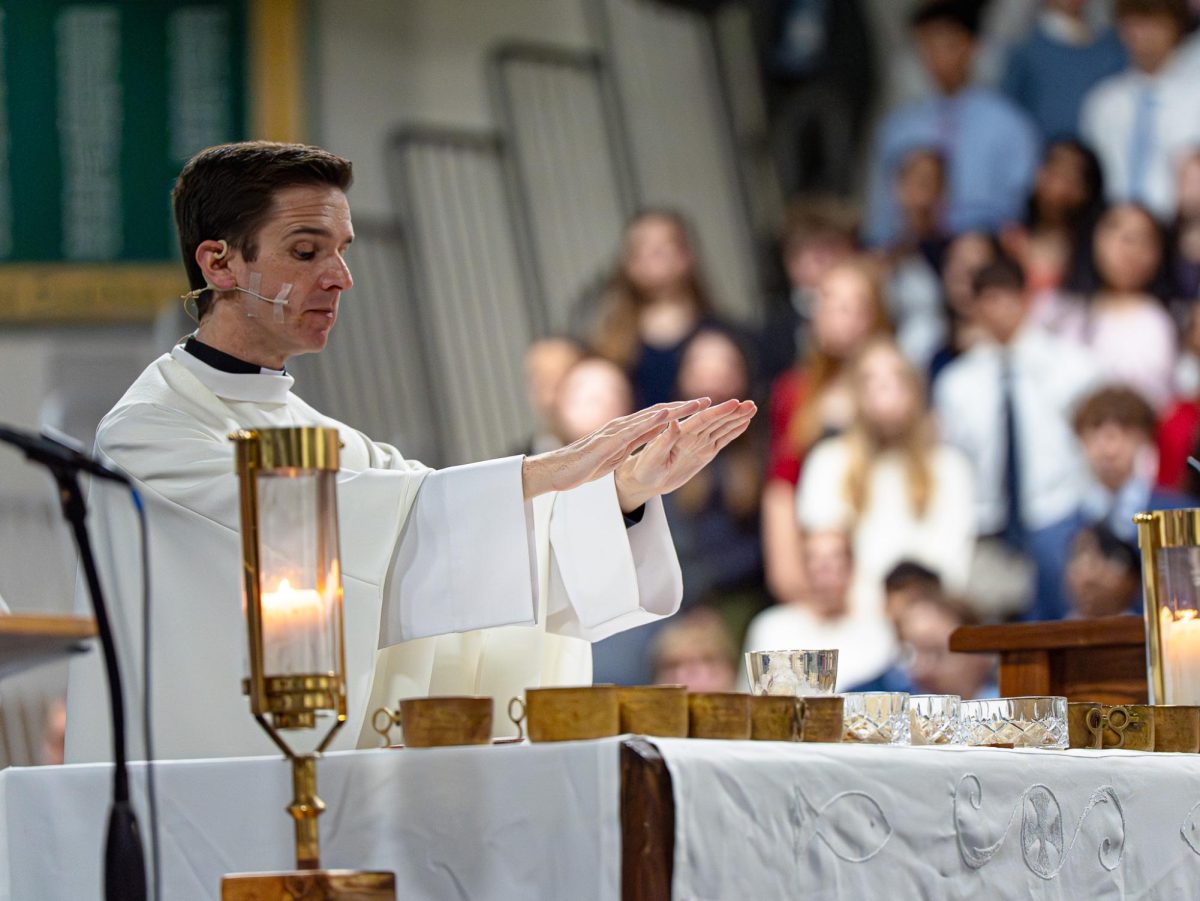
School traditions reinforce those lessons. Events such as the Mandamur Service and Easter Mass stand out as key moments in the season.
Hanifan particularly noted the Mandamur service as “a great opportunity to reflect on the Passion, Death, and Resurrection of Jesus Christ,” while Perez spotlighted the Easter mass as a powerful ending to Lent.
Furthermore, practices such as the Adoration in the Smith gym and the Examen also shape students’ experiences, though reactions vary.
Though Cleeland does not always feel deeply connected to every tradition, she understands the purpose in creating space for contemplation. She also observed the school’s expectation of abstaining from meat on Fridays as another reminder that Lent is actively considered throughout campus life.
When asked whether students take Lent seriously, responses were mixed. Some students believe many do engage with Lent in their own way, while others see participation as inconsistent. Cleeland suggested that it is often less about lack of interest and more about forgetting to maintain new habits over the full 40 days.
Although there are differing opinions, students agree that Lent still creates a shared atmosphere in the Jesuit community.
Hanifan suggested adding a Stations of the Cross service to further deepen the meaningful sentiment of Lent.
As Lent transitioned into Easter, students enjoyed spending the holiday by participating in various activities such as attending mass, spending time with loved ones, Easter egg hunts, and even getting baptized–as was the case for Brown.
At Jesuit, individual experiences reveal how Lent and Easter are lived out across campus. While students may not all participate in the same way, the season can establish significance through reflection, sacrifice, and celebration which linger on even after Easter Sunday concludes.