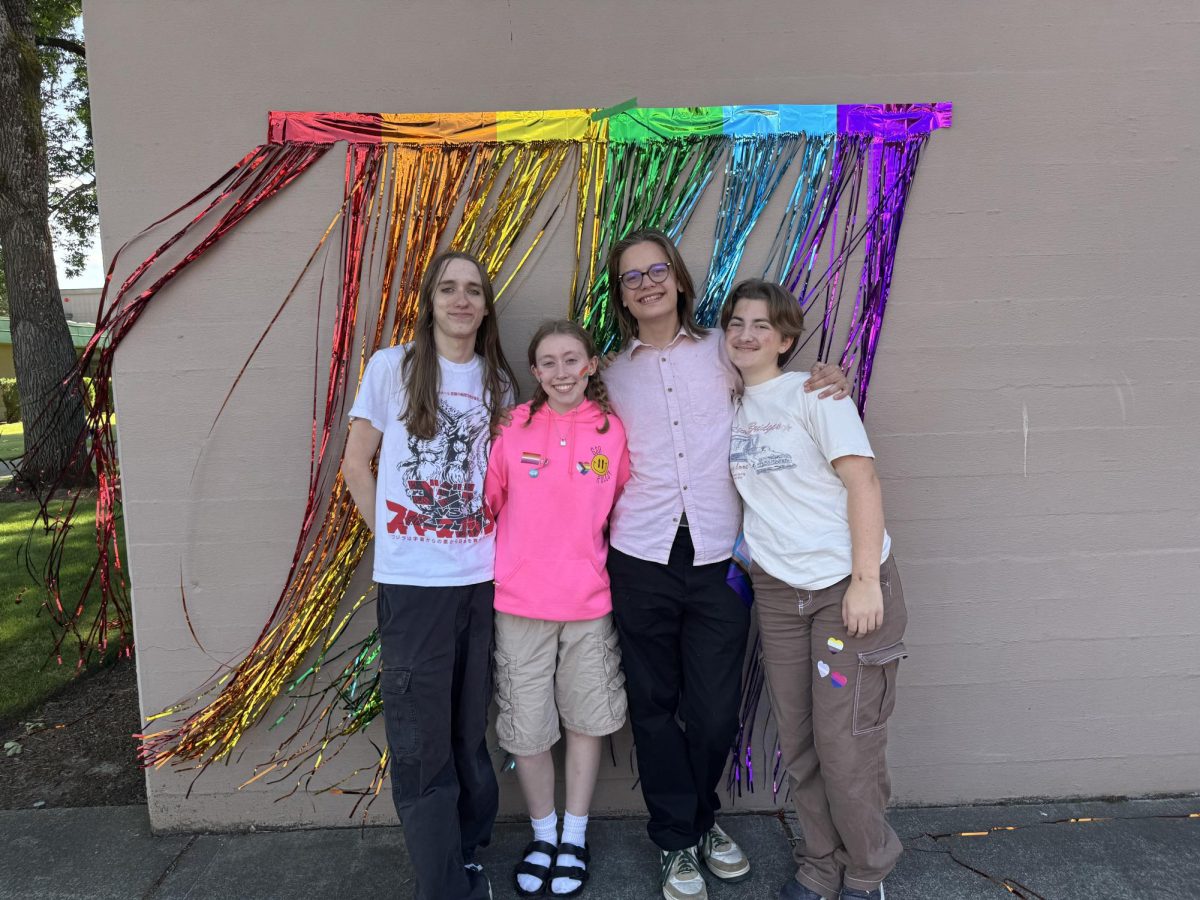


Two people. Companions. One, a man, thousands of miles away from his home in Colombia, facing instability and uncertainty, seeking refuge at the Kino Border Initiative. The other, a teenage girl from Oregon, with a warm bed and a comfortable home to return to.
Both battling heat exhaustion, the man shared his story with senior Kate-Margaret Vuylsteke as they healed together in the infirmary. He had left his country due to violence, crossing the Darién Gap, a dangerous place for migrants due to environmental and trafficking issues.
“[He was seeking] the American dream,” she reflected.
Vuylsteke, through that experience, had grown as a “woman for others.”
Not only did her service provide her with the opportunity to walk alongside the marginalized, her bond with her classmates cemented during her week at the border in Nogales, Arizona.
“The people I went on KBI with, I consider my brothers and sisters,” she said. “We became very close through faith and the stories we heard from the migrants.”
An integral part of Jesuit education, the possibly daunting 65 hours of required Christian Service provides students with the opportunity to complete enriching service work through the Arrupe Center for Justice. Located in a small office in lower Arrupe, the Arrupe Center for Justice is home base for the Jesuit mission of preparing students to become “Men and Women for others”.

Students gain real-world experience and an understanding of advocacy and service through immersing oneself in vulnerable communities. These include the houseless, the elderly and those on hospice care, people with disabilities, and migrants or refugees. Christian Service provides vital experience for students to develop kinship with marginalized communities, those pushed towards the edges of the earth.
However, the way in which students serve is critical to the program’s success. At their Christian Service Orientation, sophomores are introduced to the idea of noblesse oblige. Ms. Andrea Casey (‘97), Director of the Arrupe Center for Justice, describes noblesse oblige as “entering into service with an attitude of superiority. It’s very one sided. It’s where you’re coming in to try and help or fix the people you are serving.”
She encourages a different approach, one where students work to be in harmony with those they serve.
“What we are asking for is for students to enter into a relationship that is mutual,” Casey said. “When you’re in a relationship, you both have something to give. We really try to set students up to go into service with an open mind and an open heart to learn from the people that you come to know in service. The real focus is about relationship and companionship; what we refer to as the ‘ministry of presence’. Rather than trying to fix or serve or help, it’s really just entering into a relationship and accompanying people, meeting them where they are.”
In July 2024, five students embarked upon their mission of immersing themselves into the lifestyle of the community they were serving, as well as a mutual relationship with them.
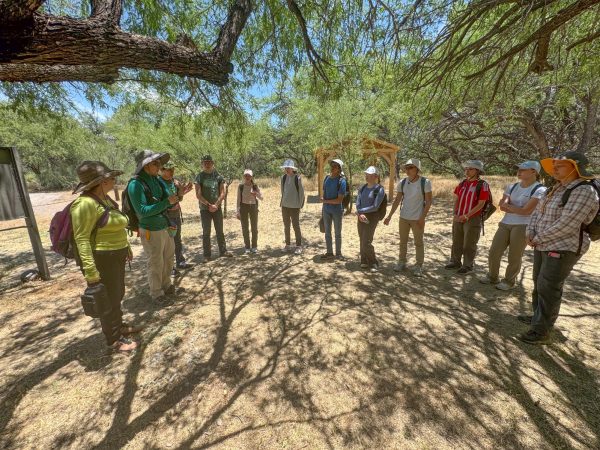
Kino Border Initiative (KBI) is one of the prominent service immersion trips that Jesuit students have the opportunity to embark upon as a part of their Christian Service experience. Students travel to the US-Mexico border in Nogales, Arizona for one week, intentionally and wholeheartedly immersing themselves into the community. While they go to complete their service hours, they return with an authentic companionship among those they served.
Kino Border Initiative is a program with three main purposes in caring for migrants and refugees.
“They do a lot of education, and that’s part of what we have been able to participate in in the past,” Ms. Emily Schmidt, Associate Director of the Arrupe Center for Justice, explained. “They provide a lot of direct services to migrants at the border, like food, clothing, legal advising, and social services. They also have an advocacy branch, which works around legislation and humane migration reform.”
For some students, KBI immediately resonated with them.
Senior Gus Vasquez, one of the leaders of Jesuit’s KBI club, felt drawn to apply because “my parents are immigrants and those are my people, and I just felt this call towards going.”
Jai-Lani Villatoro, senior leader, decided upon KBI because the idea that immersion could provide opportunities beyond the typical education of the immigration system intrigued her.
“I was drawn to KBI because of its unique immersion experience and opportunities. I learned that the participants got many different perspectives of the inhumane border issue and immigration. It taught me something that can’t be taught in a classroom or even through just stories from my own family members, you have to get as close to experiencing the situation as possible, although it will never be the same experience, in order to have more understanding and empathy for the situation.”
For leader Emilia Philips-Trujillo, senior, the idea of an alternative form of education through KBI similarly influenced her decision to attend Jesuit.
“I remember seeing it when I was thinking about going to Jesuit,” she reflected. “You hear a lot about it on the news but going there and seeing it is different. The news platforms can have a lot of bias, so being able to experience it without that was interesting to me.”
First, they were introduced. Then, for their individual reasons, they decided to apply. They knew about the migration system. Now, it was time for them to live it.
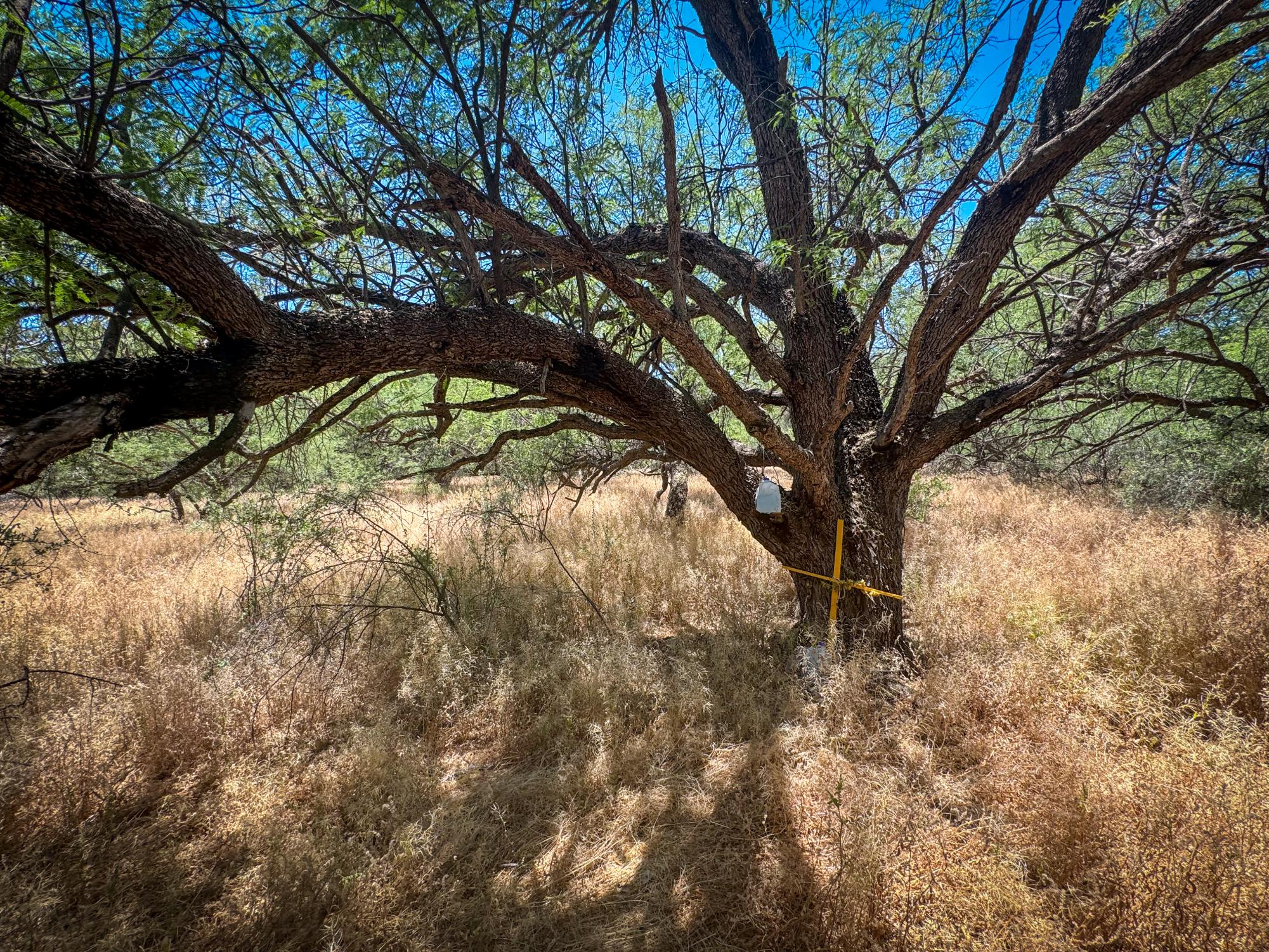
For Vuylsteke, leader, the first day proved most impactful. “There’s a reason they call it an immersion. It’s an extreme experience,” she said. “[W]e went on a hike in the more or less 90 degree weather just to see what it would be like to be a migrant and be someone who was trying to come into the country.”
Although the arid terrain and excessive humidity inhibited them, the group came prepared with the proper equipment. The migrants left without those necessities upon traversing through the area. Still, the harsh conditions left Vuylsteke challenged: “I ended up getting heat exhaustion.”
Serving with the migrants simultaneously brought the students closer together, developing both kinship with the community they were immersed within, and the community they were serving with.
“We got to serve people food at the initiative and help people with whatever they need,” Vasquez explains. “We also got to serve with each other. … [W]e created a community.”
Another key aspect of the immersion experience were the stories shared. Hearing the testimonies of the migrants wove a profound sense of shared humanity into their immersion. Through these stories, a relationship was fostered, one like no other.
“One of the many important lessons I learned was the importance of listening to real stories,” Villatoro shared. “Whether it was migrants in the comedor telling me their life’s stories or teaching me about their home country, the ranchers that own land on the border, or even the Latino border patrol officers sharing their reasons for entering that job; I learned perspectives that were augmented to my perspective on the border issue. It helped me to understand the complex nature of the situation and how to better address and advocate for it in my community.”
The stories shared were deemed most impactful for the students. The true connection lay in listening to others, in being with and experiencing the struggles of the migrants at Kino. Because of the stories, the students’ service became personal. The students and the migrants became one and the same.
The emotional impact would leave a great mark upon the students. This would be what inspired them to continue their service beyond Kino.
Sam Kaempf, senior, shared that the students had the opportunity to listen to the devastating story of a migrant who found solace from the harsh realities he was facing: “Since residents are only allowed to stay at Kino for about 10 days, we knew that this story would be fresh, having happened recently.”
“But nothing could have prepared us for the tale that awaited us,” he remarked.
The man, Cesar, told the story of his present reality. He told the students of his love for his family, including his wife and step kids. After his wife’s uncle died, a gang started stalking him and his family, in hopes of gaining the possession of the ranch that the uncle had left to Cesar and his family. Cesar decided to run from the gang, Kaempf explaining that “they had caught him and beat his wife until the baby she had been carrying inside of her was dead.”
Cesar became desperate to migrate to the United States in search of safety for himself and his family. He began crying, silently, tears streaming down his face as he told the students of his experience.
He decided to pay a smuggler to ensure that his family, at the least, could cross the border. There wasn’t enough money for Cesar to cross with his family, so he waited patiently for the opportunity. When that time came, he discovered that the crossing of the border had been set up. The coyote, a person who is paid to smuggle migrants across the US-Mexico border, had lied, telling Cesar that in order to be granted asylum, he simply had to cross the border and turn himself in. The coyote deceived him, and the migration system failed him. He was deported, with no one to turn to in a country unsafe for him. At this point, Cesar was sobbing.
“He was all alone in Mexico, with his loved ones less than 100 miles away.”

The testimonies invited the students to act in service towards the migrants. They knew they couldn’t fix his problems, or change his realities, but they had learned of the importance of small gestures, acts of love and service. “We made him a bracelet and a letter and gave it to him the next time we saw him. He was very grateful and began to cry. I saw how this tiny, seemingly small act was actually very important to him,” Villatoro shared.
Upon returning from Nogales, those five students had completed their immersion. Through brutal climates, warm food, and pivotal stories, they were left with a multitude of changes. A newfound perspective on the migrant community, bonds that would last a lifetime, and fulfillment that could only be found in service led the students towards one path forward.
The immersion was over, but their mission was incomplete, fragmented. They were not done serving. They had more to give, and they decided to give it back through the Jesuit community.
Vuylsteke said that starting a club felt necessary for her and her companions upon returning to Jesuit: “You can’t just bottle away those experiences. You can’t just pretend it didn’t happen when you get back. You have to talk about it, you have to advocate for them, you have to educate other people.”
The students plan to help educate the Jesuit community on the ever so present migration issues in America. Philips-Trujillo explained that the students wanted to “take what [they] learned and put it into fruition.”
Last school year, the students hosted a clothing drive, and created a social justice week workshop to educate the students. This year, their plan is to host a fundraiser in January in hopes of giving back to the migrant community of Portland.
The students agreed that the companionship developed upon their immersion was unique and irreplicable.
Kaempf reflected: “Those experiences would never have the same impact or provide the same level of understanding if I hadn’t actually been there. That level of human connection, meeting real people who are actually experiencing these injustices, forces your eyes open in a way that reading about something or watching something never could.”
The mission of becoming a man or woman for others, a phrase so intrinsic to Jesuit, can only be fulfilled through being a man or woman with others.