As immigration enforcement continues, protests, fear and uncertainty are shaping the daily lives of citizens across Oregon and the Portland Metro area.
In June 2025, U.S. Immigration and Customs Enforcement (ICE) officers arrested an asylum seeker outside a Portland court room after she appeared for her hearing regarding the matter. In the months following this situation, multiple reports were made of mass deportation and arrests from ICE began to occur.
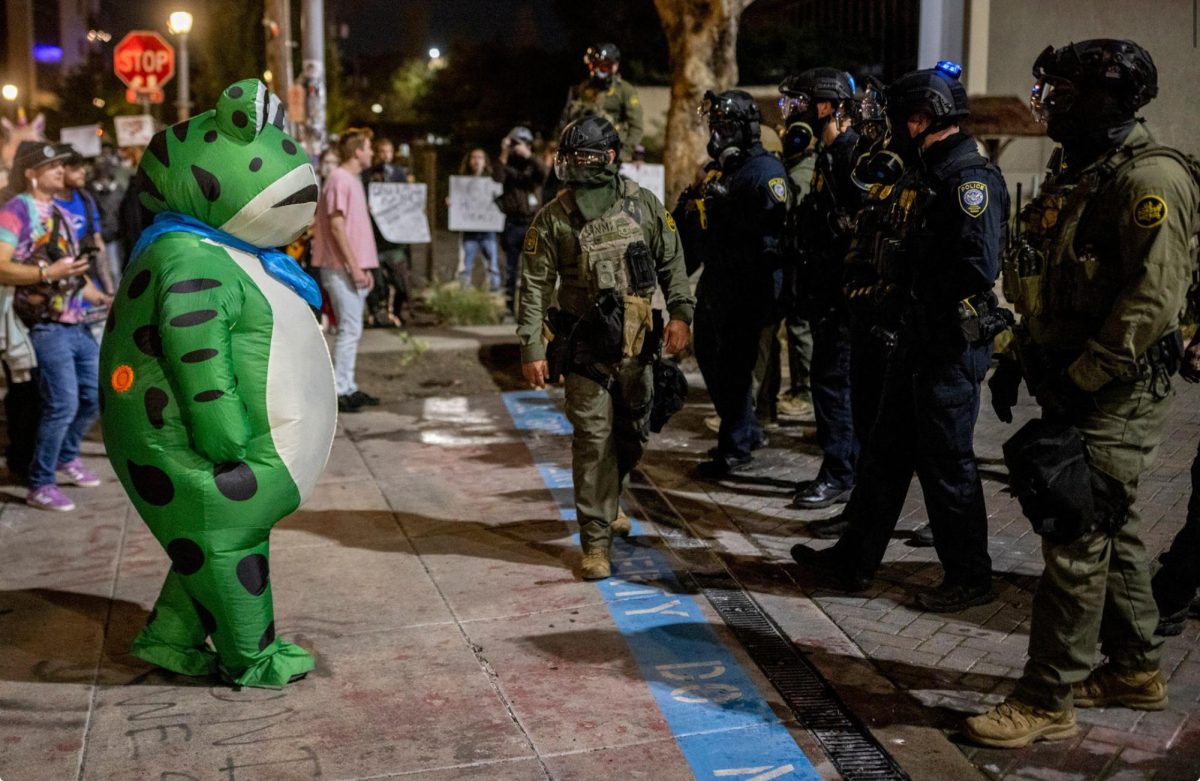
Citizens across Oregon began to protest against these deportations which prompted President Trump to attempt to send the National Guard to the “out of control and crazy” Portland in August. Further, a lawyer for the Justice Department, Eric Hamilton, argued that the consistent protests around the ICE building in Portland is “a rebellion against immigration authority.”
Oregonians continued their protests and eventually the U.S. District Judge Karin Immergut blocked the national guard from Portland, stating to the Trump administration that the protests had been “Predominately peaceful.”
Although blocking the national guard’s presence was a big step in keeping public protests in Portland, multiple innocent people, including U.S. citizens, have been detained by ICE.
A predominantly stated reason for the immigration raids was to keep out “criminals,” as a Customs and Border Protection spokesperson stated: “DHS agencies are working hand in hand in the Portland area to keep our communities safe by arresting aliens with criminal or immigration violations.”
Conversely, according to statistics updated 11/16 by TRAC Reports, over 73% of current detainees have no criminal record and majority of those who did had minor offenses such as simple traffic violations.
Some people detained are described as hardworking and giving members of the Portland community.
For example, U.S. citizen Frank Miranda, who was born in California, was outside of his workplace where he was threatened with dogs, struck from behind, placed in handcuffs, and thrown into an unmarked vehicle. For hours he was held in the Portland ICE facility where he was later released. Miranda has his US birth certificate and when he reached out to the DHS, he was left with no response.
Mrs. Montez, Director of DEI at Jesuit, said that she’s seen “a lot of fear and uncertainty from the Latino community. I see a lot of worried families that are worried to leave their home for basic things like going to work or going to the grocery store.”
Camila Reyes Perez, junior, voiced similar concerns: “I have witnessed many families living with constant anxiety, worried that a normal work day can turn into a day that is unforgettable. Many in the Latino community fear going to work, dropping their children, or even going to the grocery store to get basic necessities for their families.”
These realities affect Jesuit students, and the greater Portland community, many of whom carry this emotional burden every day, living with fear and concern.
“Portland feels different when fear becomes part of everyday life,” Reyes Perez said.
Montez emphasized the importance of understanding and education about ICE trends around Portland, and within the United States. She argues that reliable, credible information is critical to preventing unnecessary panic and reducing fear.
“[S]tudents need to see facts and adults too,” Montez said. “We need to make sure that what we’re seeing is not just based on rumor and is based on what’s being seen and reported and what people are confirming is actually ICE presence. It’s complicated, and I would just say that it’s really important that people know the facts, and it’s really important that people know what the Latino community wants”.
Fear can dominate the view of ICE’s presence in Portland, making true and authentic stories of love all the more important to uplift and understand.
Reyes Perez added: “When people are aware of the real stories behind the headlines, it becomes harder to judge and easier to care. Silence and ignorance makes us students feel isolated but if we have awareness within and without our school community it makes us feel heard, seen and protected.”
Stories about the hardships and adversities have spread throughout Portland, but Montez believes that there is joy and hope within those stories: “[P]eople making art in front of the ICE facilities, people doing salsa classes. I wish that people could see the joy that Portland is trying to foster in something that’s really hard.”
Jesuit’s own Diversity, Equity, and Inclusion office is offering initiatives that foster education and support the community affected by the ongoing immigration issues in Portland.
“We’ve been trying to be strategic about how to support our immigrant students and their families,” Montez explained. “For us, that continues to be a call to have different know your rights workshops, to have different lawyers available for families”
Montez hopes to continue immersive and supportive workshops for students at Jesuit. Through these education experiences, she hopes to help students feel adequately prepared for potential encounters with ICE. Rather than fueling nervous, scared feelings surrounding ICE, Montez hopes to help students understand the change they can make in their communities.
At Jesuit, staying informed and educated hasn’t been the only way to reduce the fear surrounding ICE in the Portland area. Students and staff have found faith and hope as a means of working through the worry.
Montez said that going to the recent Ignatian Family Teach-In for Justice, a conference in which individuals participate in advocacy related activities and meet with state representatives, fueled her faith and hope surrounding recent ICE issues.
“My biggest moment of hope was going…on the Teach-In,” she said. “To have so many children of immigrants talk about the importance of immigration reform, so clearly and so powerfully. That was really what gives me a lot of hope.”
Reyes Perez asks students to remember the call back to Jesuits core mission in encountering ICE raids: “In times like these, information is not just knowledge, it is a form of care, strength, and unity reflecting our Jesuit call to be men and women for and with others.”
These prevalent immigration enforcement issues have left Jesuit with a call to cultivate hope in a community grappling with fear and uncertainty. Further education, action against unjust immigration policies, and a commitment to the Jesuit mission are vital to ensuring change within the Portland community.
Stay on the lookout for flex events hosted by Jesuit’s DEI office to educate the student body on current immigration issues.