For most students, the Community Celebration Assembly on Thursday, March 12, 2026 lasts less than an hour. But for the affinity clubs performing, those few minutes represent weeks of choreography, rehearsals, and behind-the-scenes planning.
The assembly, which caps off Social Justice Week and this year’s theme of identity, is the result of months of preparation from student leaders across campus. From coordinating dozens of performers to selecting music and creating choreography, club leaders and members spend countless hours preparing for the performances that bring the celebration to life.
For the Filipino Culture Club, preparation began shortly after finals week in January. Senior club leader Elissa Paez said the group started rehearsing the week after finals ended on January 23 and has been steadily increasing practices as the assembly approaches.
“We started preparing for the Community Celebration Assembly the week after finals,” Paez said. “So far, it’s been around two or three after school practices a week and practices during FLEX as well. We’ve been gradually adding more practices as the day of the assembly comes closer, and it’s been tiring but really fun.”
This year, the club will once again perform the Tinikling, the national dance of the Philippines. The dance requires careful coordination as performers step between bamboo sticks that partners rhythmically clap together.
“The Tinikling can definitely be intimidating, so coordination is super important,” Paez said. “We need exactly 12 members to dance and clap the sticks together, and since everyone has a busy schedule, it can be difficult to fully practice.”
Despite the challenge, Paez says the performance is about more than just the dance itself.
“Performing the Tinikling gives our club the opportunity to highlight our Filipino culture by showcasing the Philippines’ national dance,” she said. “It also represents our solidarity as a group, since the dance itself requires teamwork and trust.”
Chinese Culture Club has also spent weeks preparing for their performance. Senior leader Carol Wang said she and co-leader Cindy Zhao began discussing what kind of dance they wanted to perform this year.
“We try to do a dance that the club hasn’t done before,” Wang said. “We have been doing weekly practices since the beginning of February. I start by teaching all the dances, and then after we master the foundations of the dance, I create formations and begin polishing everyone’s moves.”
While last year’s routine featured a softer melody, Wang said the club wanted to take a different direction this year.
“Last year, our performance had a softer melody and we decided to go the opposite route this year by doing a dance that emphasizes fierceness and strong drumming music,” Wang said.
For Wang, the performance is also an opportunity to share culture with the broader Jesuit community.
“It’s really important to Chinese Culture Club because the dance gives others in our school that don’t know much about our culture more exposure,” Wang said. “We really love sharing cultural aspects that many have not seen before.”
South Asian Culture Club is coordinating a performance with 47 dancers, which requires careful planning and teamwork. According to senior club leader Shriya Marla, the group started preparing in January with song selection and choreography, and has been holding practices twice a week to get ready for the assembly.
Choosing the music was also a thoughtful process. While the club traditionally performs Bollywood-style dances, Marla said the leaders want to incorporate something new this year.
“We have always done Bollywood dance because it’s very popular and a fun way to showcase our culture,” Marla said.
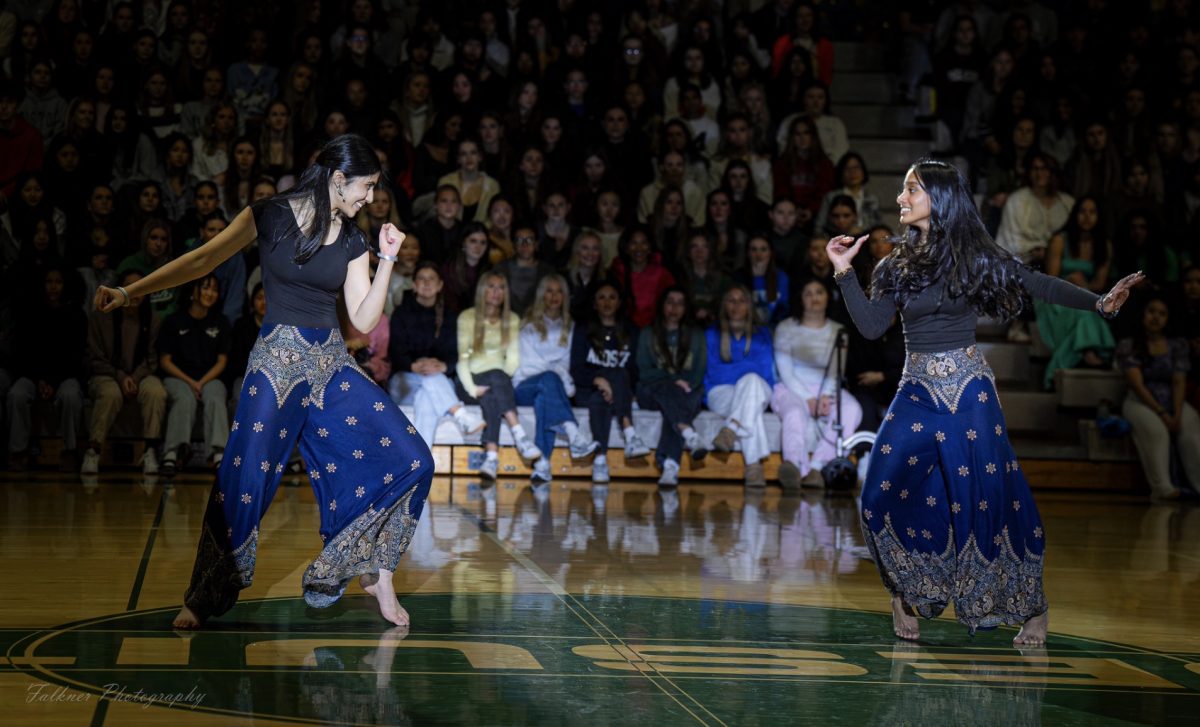
In addition to the larger group performance, Shriya Marla and Shyla Ilavarasan will perform a duo dance together.
“For our duo dance, since both of us have learned Indian classical dance for 12 years, we wanted to showcase that art form and decided to choreograph a dance to an English song.”
Coordinating such a large group comes with its own challenges, especially when designing choreography that highlights everyone.
“Since we are doing a dance with 47 people there is a challenge of coordinating people, finding practice times that work, and also designing formations that ensure everyone is seen and has their own moment,” Marla said.
Much of the work happens long before the first rehearsal even begins.
“It takes a lot of time and effort to just visualize and plan the dance before starting to teach it,” Marla said. “Everything we have done and chosen has all been intentional.”
Although students will only see a few minutes of each performance on Thursday, March 12, those moments represent months of collaboration, creativity, and dedication from the clubs involved. When the music starts and the performance begins, the Jesuit community will not just be watching dances, they will be seeing the results of weeks of effort from students eager to share their cultures with the school.