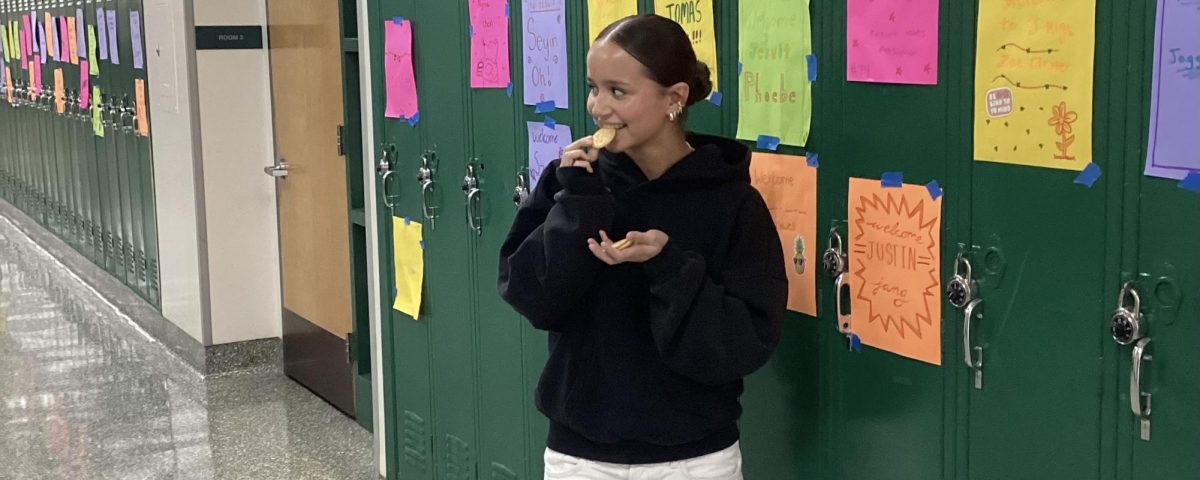
Picture this: it’s sixth period, and you struggle to focus because the school day is almost over. You are getting restless from sitting in classes all day, you can’t stop thinking about how much homework you have, and on top of all this, your stomach won’t stop growling because you were in lunch one and haven’t eaten in over 3 hours.
Students should be allowed to eat as needed between classes, whether that is inside or outside.
The Jesuit Student Handbook states “Students may not consume food and drink, except water, inside school buildings or on the Alumni Quad.” As for outside food consumption, students are limited to the Hayes Plaza and pavers between Elorriaga and Gedrose.
Students are told not to eat on the Alumni Quad, yet that is where the annual freshman pizza party is hosted every year. Students can’t eat in classes, but this rule is forgotten if the teacher brings donuts in. Students can only eat in certain approved areas, unless your club leader brought cookies for this week’s meeting. When do we draw the line between when these rules need to be followed and when they are irrelevant?
Some may argue that students should just eat a snack during flex, but what if they need to use this time to talk with a teacher, go to silent study in the CLARC, or have another prior commitment?
Sometimes working a full meal into a busy student’s daily schedule is just not a viable option.
“For early morning practice, I don’t have time and don’t want to wake my family up to make breakfast,” said Claire Scott ‘26, a member of Jesuit’s Pom Dance team. “Instead, I eat a protein bar, and then go straight from practice to class. The next time I am able to eat is not for another three hours for a break, so it is hard for me to focus during first and second period.”
Some students are missing the most important meal of their day.
“When it comes to diet, the most important thing for teens to focus on is fueling themselves regularly. Skipping meals isn’t healthy and can negatively affect mood, energy levels, and academic and sports performance” (Healthline).
If students could eat a quick snack between classes, they would have an opportunity to fuel their bodies more regularly, resulting in a multitude of benefits.
Some may argue that the restrictions on places to eat serves its purpose as a way to keep our campus free of crumbs, litter, and maintain overall cleanliness. Jesuit holds itself to a high standard, but doesn’t trust its community to be responsible and careful while eating? Surely a high schooler would be mature enough to be careful when eating and pick up their food if they spill.
It’s time to make a change to Jesuit’s food and drink policy and allow students to eat when they are hungry.
Opinions published on Jesuitnews.com represent the beliefs of the writer(s) and don’t necessarily reflect those of Jesuit Media, Jesuitnews.com, The Jesuit Chronicle, or Jesuit High School.