A year ago, in my junior year of high school, a friend of mine from Sunset High School invited me to her high school homecoming.
Immediately, I hesitated. I thought back to the last 3 years of Jesuit dances, including homecomings and spring and winter dances. My first instinct was to say no. In my experience, high school dances, specifically at Jesuit, were okay at best. If you enjoy stiffly standing while listening to mediocre music in a hot, sweaty gym with the occasional jumping during the chorus and awkward dance circles (which nobody joins, by the way), then a Jesuit dance might be perfect for you, but for me, I had no desire to repeat this experience at another school.
But after some convincing from my friends, I said yes. I wanted to make some more fun high school memories and spend time with my friends. The day of the dance, I went over to my friend’s house, met some of her school friends, put on my dress, did my makeup and hair, listened to some music, and had a great time. Then, we took pictures at a nearby park and grabbed some food. Generally, most people would say that this is the most fun part of any high school dance: getting ready. By the time I was in my friend’s car on the way to the actual dance, crammed in the backseat with a group of people, I mentally prepared myself to expect the same old, awkward and boring Jesuit dance.
It was not.
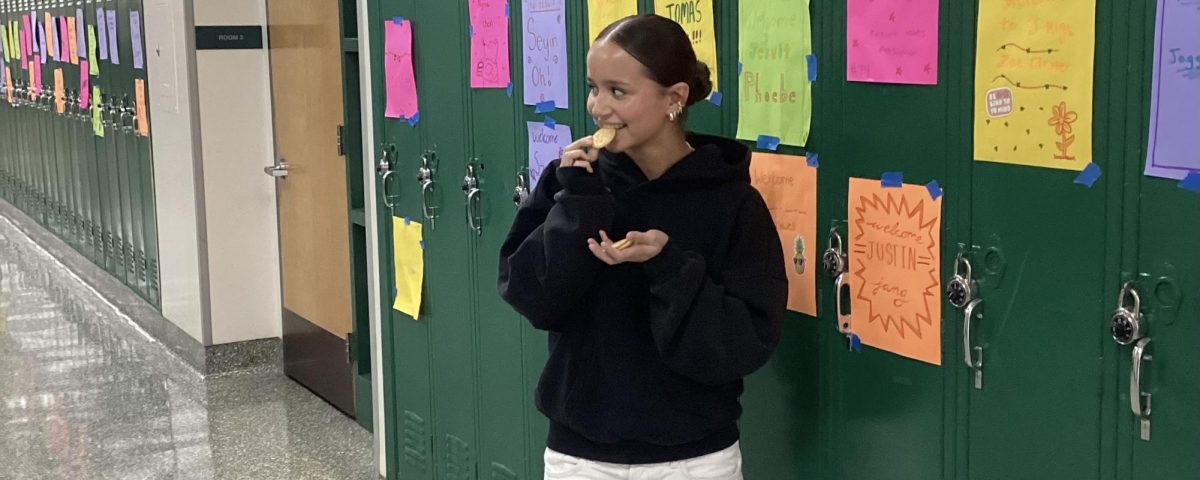
When entering the school, I was shocked to see all of the school hallways decorated from top to bottom with Y2K decorations, which was the theme for the night. There were streamers, posters, signs, and balloons almost everywhere. I instantly thought back to Jesuit’s homecoming earlier that year, which had virtually no decorations.
After my friends checked me in as a guest, we continued down the hall and into the cafeteria and gym, which had pizza, cookies, ice water, a movie playing on the cafeteria screens, photobooths, ping pong tables, and a bouncy house. Again, I could not help but compare to Jesuit’s homecoming, which only had gatorade tubs filled with hot water and used mini dixie cups scattered across the table. The difference between the two schools was night and day. It made me wonder, with a school like Jesuit, where funding should not necessarily be a huge problem, why are our school dances so underwhelming?
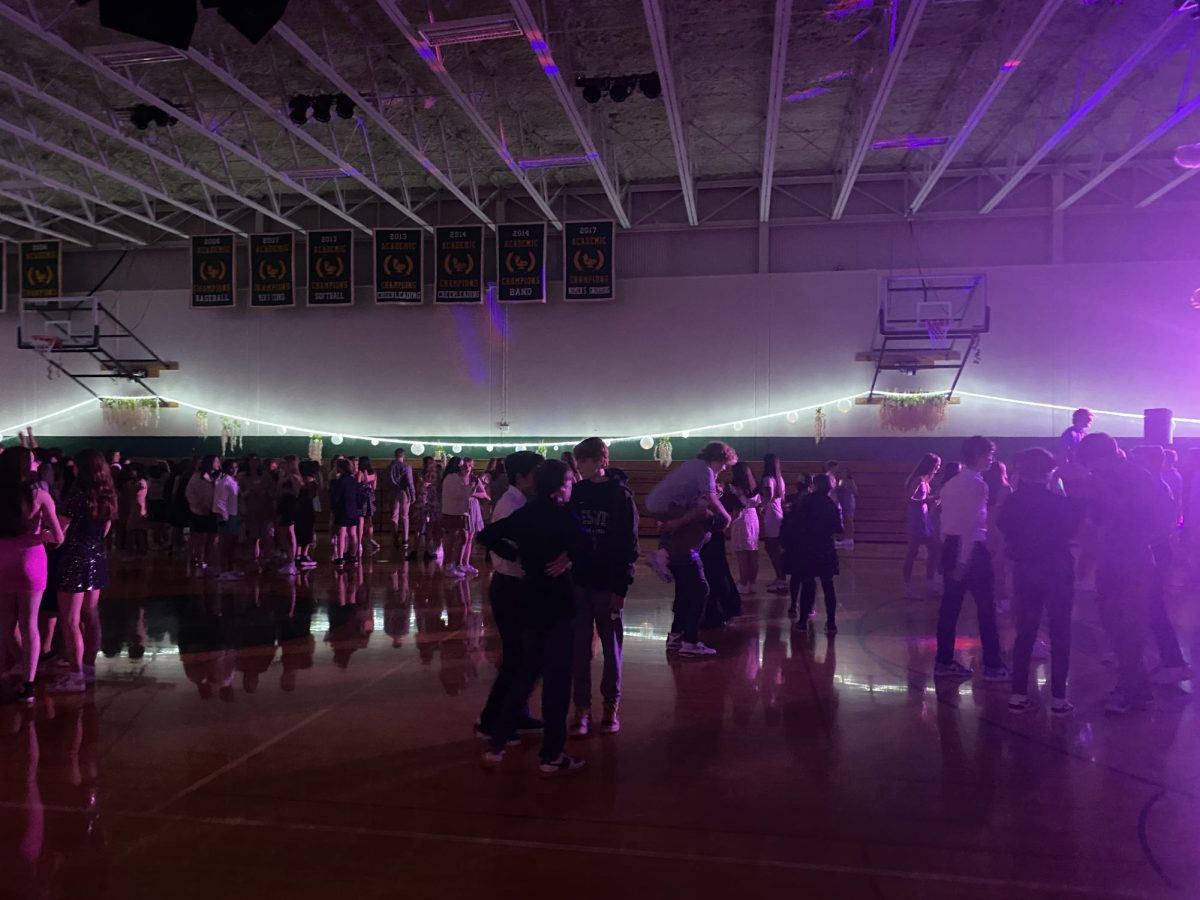
Moving outside onto the dance floor, I was shocked to see students actually dancing- something that is clearly missing at Jesuit dances. More importantly, everybody seemed happy to be there. Even though I was not from this school, I felt like I was a part of their community for the night. For the first time in three years of high school dances, I stayed the whole time with my friends.
So is Sunset just better at school dances? From my experience, probably. But what makes them better? And how can Jesuit improve their dances?
To answer this question, let’s take a look at the most recent school dance at Jesuit: the Jesuit-Central Catholic spring dance, which experienced an extremely low Jesuit turnout. Marketed towards underclassmen and combined with Central Catholic, the spring dance was expected to be a huge success. However, the turnout and general attitudes of the underclassmen said otherwise.
“It just didn’t seem interesting,” said Taylor Pearson, a Jesuit sophomore. “None of my friends were going.”
Ever since I was a freshman, I’ve heard the same verdict about school dances repeated by upperclassmen: “The only fun part about school dances is getting ready and hanging out with your friends after.” When students, specifically upperclassmen students, speak negatively about something, it’s likely that underclassmen will follow their advice. It’s easy to absorb their opinion without questioning it. Eventually, their skepticism can shape the school’s social norms. Currently, the norm is not to stay at school dances for longer than 20 minutes. If you do decide to stay the whole time, you’re the outlier. Besides, who would want to go to a school dance if none of their friends are going?
When asked how Jesuit could improve their dances, senior Piper Shepherd candidly said, “I just feel like there’s not a lot of commitment from Student Government to actually make them good. It’s just like getting it done and having the dance, and not actually putting in a lot of effort to make it enjoyable for the class. There’s no decorations, the music is bad, and the school spirit is so low that nobody is enjoying themselves, so everyone leaves early. I feel like if we actually committed to a theme, had good decorations and music, then I think it would be better.”
While there is always a theme for school dances, there are few decorations that match it. In the past, a theme served the purpose of creating a cohesive and immersive atmosphere. It provided the framework for decorations, outfits, and music. For example, at the Sunset dance, the Y2K theme was a central part of the event. The music and decorations were faithful to the theme. Even the movie playing in the cafeteria, which was Mean Girls, paid tribute to the early 2000’s.
Now, our dances have a theme for the sake of having a theme, and have little to do with the dance itself. For instance, during the 2022-2023 school year, the homecoming theme was “The 70’s”, or “disco”- an era characterized by disco, bold fashion and music, and huge cultural shifts. Going into my first homecoming dance, I expected at the very least a large disco ball, a beaded entrance (which, to Jesuit’s credit, there was a beaded entrance) , balloons and streamers everywhere, vibrant lighting, and of course, 70’s music. However, the only 70’s song that was played the entire night was “Staying Alive” by the Bee Gees, and even that felt more like an obligation than a genuine effort to embrace the theme. Decorations were minimal, and there was little that visually connected the dance to the decade it was supposed to represent, making it far less engaging and interesting than it could have been.
However, despite the criticism, Jesuit’s student government isn’t entirely to blame.
Lucia Crespo, a member of student government, highlighted the effort students put into making the school dances: “We have to make the emails that are sent to the student body, figure out a theme, and there’s an events committee that takes charge and picks a bunch of themes that the student body likes. And then for the dance setup, all of the student government has to set up and take it down.”
When asked to comment, Ms. Lakey explained, “The process is long and takes a lot of work. The planning process starts usually about two months in advance. Our events committee takes on the brunt work of planning out the dance from the theme, finding a DJ, surveying students for music ideas, decorations, admin approval, logistics such as games, items needed, food and drinks, ticket sales and so on. They connect with other committees like Media and Public Relations for emails, announcements, and posters about the dance.”
Additionally, Ms. Lakey emphasized the challenges student government faces when it comes to planning: “Our students are here for several hours setting up on a Saturday morning and coming back Sunday morning for a massive clean up. The stage set-up and carpet squares placement and clean up alone take so much time. We also don’t have a large budget so people complain about decorations, but we can only do so much.”
After all, there is only so much the student government can do. While Jesuit should absolutely put more effort into decorations, activities, and theme cohesiveness, I believe that the real problem behind Jesuit dances is us, the students.
Think back to freshman year. Interestingly enough, the dance at Jesuit that is widely considered the most fun is freshman fun night, which many students look back on fondly. But why is that? Is freshman fun night really that much better than homecoming and prom in terms of planning and budget? I don’t think so. I believe that the real reason freshman fun night is considered the most fun school dance is because the attendants are freshmen, meaning that they have newly entered high school and have yet to hear what upperclassmen have to say about school events and dances. As a result, they go into freshman fun night with excitement and not knowing what to expect.
Senior Eli Hanson attested, “I think there was a lot of excitement because we didn’t know what was actually going to happen. And there was a very clear theme that everybody was on board with, too, because we were freshmen, and I think it was a really fun chance to meet other people. And it was a smaller dance, and it seemed well planned.”
Another senior, Jordan Hernandez added, “I feel like because it was student lead, that made it a lot more fun for us too. And we were just freshly into high school and getting to know everyone and more outgoing.”
When I went to Sunset’s dance, everyone was dancing. Everyone looked like they were actually enjoying themselves. To me, that makes all the difference. When getting ready with my friends, they all seemed excited to go to the school not as an obligation, but because it was something fun to do. This is what Jesuit is missing.
In the end, Sunset might do some things better, such as decorations, more activities, and more attention to detail, but these things only matter because the students meet that effort with excitement and enthusiasm. Jesuit undoubtedly needs to improve their dances with better music, clearer themes, activities, and more intentional planning, but even if every hallway were covered in decorations, even if the music was more “hype”, it wouldn’t matter if every student walked in expecting to have a bad time or to leave within the first fifteen minutes.
So, will Jesuit students and student government be up to the challenge come Prom? We’ll have to wait and see.
Opinions published on Jesuitnews.com represent the beliefs of the writer(s) and don’t necessarily reflect those of Jesuit Media, Jesuitnews.com, The Jesuit Chronicle, or Jesuit High School.