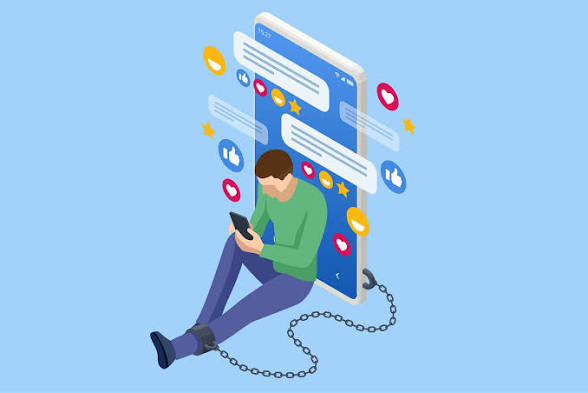
Have you ever opened your phone to check one notification, only to find yourself 30 minutes deep in TikTok with an essay still unwritten?
You’re not alone, and it’s not entirely your fault. Social media platforms are designed to keep us scrolling, and students spiral into a cycle of procrastination and stress.
Fixing this problem comes from two fronts: students must utilize their resources by using self-management tools, while social media companies need to create features that support focus instead of distraction.
U.S. teens spend an average of 4.8 hours a day on seven popular social media apps, with YouTube, TikTok, and Instagram accounting for 87% of their time online, according to the American Psychological Association. That’s nearly five hours that could be spent on homework, sleep, or enjoying life off screens.
The American Psychiatric Association recommends practical steps students can take to limit their time online: turning off notifications, setting time limits and taking periodic breaks from platforms. The solutions are not complicated. The question is whether students have the willpower to implement them.
Self-control only goes so far when platforms are designed to be addictive.
“Social media platforms know that the answer is to structurally correct harmful design features and functions,” said Mitch Prinstein, PhD, APA’s chief science officer. “Most children and adolescents lack the experience, judgment and self-control to manage their behaviors on these platforms.”
Instagram has Teen Accounts that are automatically applied to users under 18. It offers time management tools with daily reminders to shut the app after an hour and sleep mode from 10 PM to 7 AM. Instagram created Teen Accounts in hopes of ensuring teens are safe and spending their time well on the app.
Teens have largely ignored these reminders. That is when students’ self-management and willpower must align with the encouragement of social media to shut off the screen.
Social media platforms must continue to implement tools that make it easier for teens to enforce their own time boundaries. Doing so would support self-management and help students use those 4.8 hours a day for what is important. If nothing changes then students will continue to procrastinate and harm their academic performance with missing assignments and lack of sleep.
Students should start to take advantage of tools today to stop procrastination. This will lead to healthy habits and help students be less dependent on social media. Remember, you’re not alone in your struggles to stay off your phone, but also know you can take action to go against the addictive nature of social media.
Opinions published on Jesuitnews.com represent the beliefs of the writer(s) and don’t necessarily reflect those of Jesuit Media, Jesuitnews.com, The Jesuit Chronicle, or Jesuit High School.